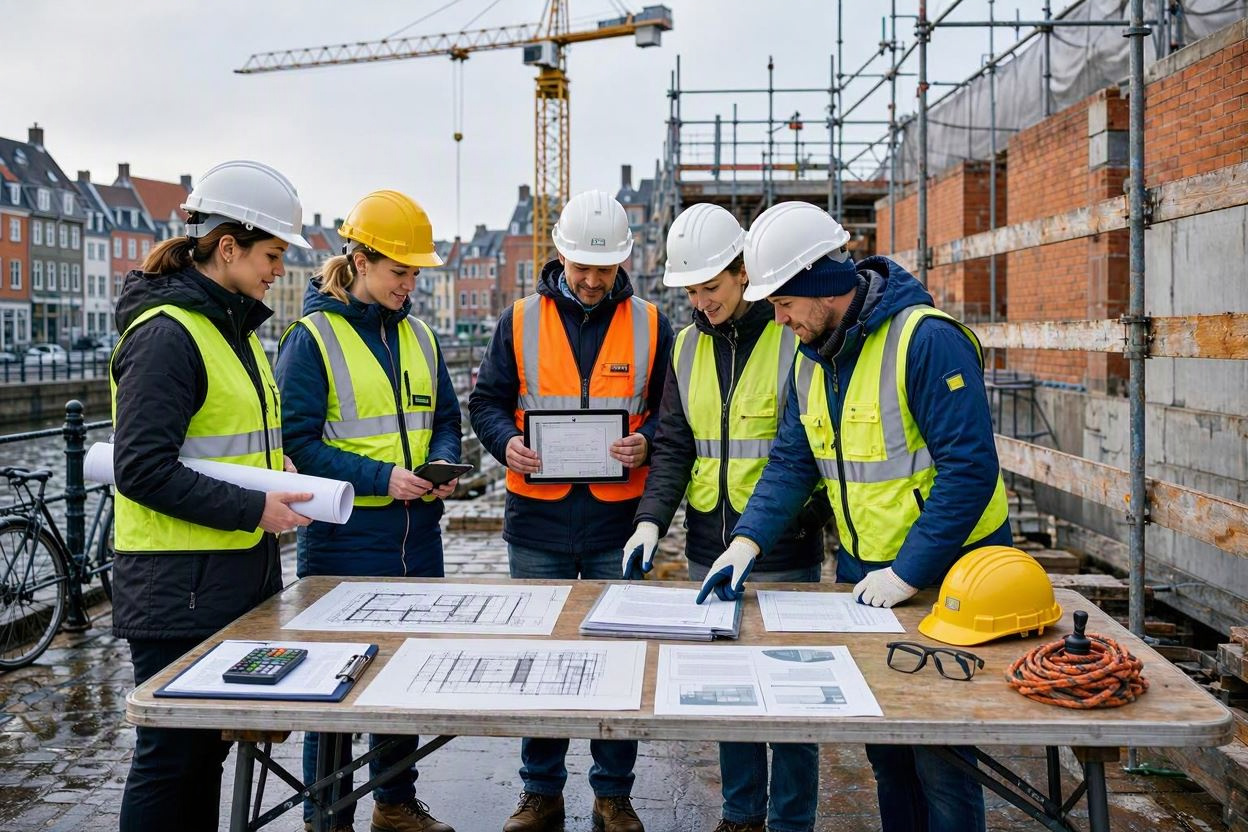
Foreign construction companies can find attractive opportunities in Denmark, but entering the market requires more than winning a project. Subcontractors may need to address contractual, tax, employment, registration, and regulatory matters before work begins. Lead Roedl is relevant to businesses navigating Danish and international legal relationships, particularly where construction activities involve foreign companies and workers.
A clear legal framework helps contractors understand their responsibilities before employees arrive and before subcontracting arrangements become operational.
Why Construction Subcontracting Requires Careful Planning
A construction project can involve several parties, including the Danish client, general contractor, foreign subcontractors, suppliers, and individual workers. Each relationship can create separate obligations.
The subcontractor agreement is therefore a central document. It should explain the scope of work, responsibilities, payment terms, deadlines, insurance requirements, quality standards, and procedures for handling changes or disputes.
Foreign businesses should also understand that operating temporarily in Denmark can create obligations beyond the commercial contract. Taxation, employment rules, social security, registration, and immigration requirements may all become relevant depending on the circumstances.
Lead Roedl and Cross-Border Construction Work
Cross-border construction projects often require several areas of legal knowledge to work together.
LEAD | RÖDL states that it advises Danish and foreign companies on international legal relationships and has experience with cross-border activities. Its practice areas also include employment law, taxation, real estate, construction, tendering, and procurement.
For a company assessing a Danish construction project, Lead Roedl can therefore be a relevant reference when reviewing the legal framework surrounding the planned work.
Early legal planning can help identify obligations before they become operational problems on the construction site.
Reviewing the Subcontractor Agreement
A subcontract should clearly define what the subcontractor is expected to deliver.
Important areas can include:
- Description and scope of the construction work
- Project timetable and milestones
- Payment and invoicing arrangements
- Responsibility for materials and equipment
- Quality and inspection requirements
- Insurance obligations
- Liability for delays or defects
- Confidentiality requirements
- Rules for further subcontracting
- Termination rights
- Dispute resolution procedures
The agreement should also be consistent with the main contract between the general contractor and the client.
If the main project contract imposes particular obligations on the contractor, relevant requirements may need to flow down to the subcontractor. This is especially useful where the project involves public authorities or other parties with detailed contractual requirements.
Tax Questions for Foreign Subcontractors
Tax treatment should be considered before construction work starts.
Depending on the nature, duration, and structure of the activities, a foreign company may need to assess whether its construction operations create a taxable presence in Denmark.
Other questions can include Danish VAT registration, invoicing, payroll taxation, and the treatment of workers temporarily performing services in Denmark.
These issues should not be treated separately from the commercial project. A subcontractor that understands its potential tax obligations in advance can build the relevant administrative work into its project planning.
Employment and Posted Workers
Foreign construction companies bringing employees to Denmark should review employment and social security requirements before the workers begin their assignments.
The applicable rules can depend on factors such as the employees’ nationality, country of residence, employment arrangement, and length and nature of the assignment.
Work and residence permits may also need consideration for workers who are not EU or EEA nationals.
Employment terms should be reviewed alongside the requirements that apply to posted workers in Denmark. A business should also consider working conditions, remuneration, working time, and other employment-related obligations relevant to the assignment.
RUT Registration and Construction Projects
Foreign service providers operating in Denmark may have obligations involving the Register of Foreign Service Providers, commonly known as RUT.
RUT is particularly relevant for foreign companies providing services in Denmark. Construction businesses should determine whether their specific activities require registration and make sure the information submitted is accurate.
Registration should be treated as part of project preparation rather than something to address after workers have already arrived.
A checklist covering the company, project, workers, location, and contractual arrangements can help the responsible team collect the necessary information before work begins.
Collective Agreements and Labour Conditions
Employment relations can require special attention in the Danish construction sector.
Denmark does not have a statutory minimum wage in the same way as many other European countries. Working conditions may instead be affected by collective agreements and other applicable arrangements.
For foreign subcontractors, this can create practical questions about wages, working conditions, trade unions, and contractual responsibilities.
A general contractor should also examine whether its own agreement with the Danish client contains labour-related clauses that need to be reflected in subcontractor contracts.
A Pre-Project Compliance Checklist
Before sending a construction team to Denmark, a foreign subcontractor can review:
- Is the subcontract clearly drafted?
- Are the project responsibilities and deadlines defined?
- Have Danish tax and VAT issues been assessed?
- Are workers correctly classified for employment purposes?
- Are work or residence permits required?
- Has RUT registration been considered?
- Are social security requirements understood?
- Have applicable working conditions been reviewed?
- Does the subcontract reflect relevant obligations from the main contract?
- Are insurance, liability, and dispute procedures clearly documented?
This preparation can give project managers a clearer understanding of their responsibilities before construction begins.
Building a Reliable Danish Project Structure
Foreign subcontractors entering Denmark should treat legal preparation as part of project management. Commercial agreements, taxation, employment, registration, and worker-related requirements can interact with each other throughout a construction project.
A properly reviewed subcontract provides the commercial foundation, while early attention to regulatory and employment matters can help the project operate more smoothly.
For companies unfamiliar with Danish requirements, obtaining appropriate local legal guidance before mobilising workers or signing major project commitments can make the process more structured and easier to manage.