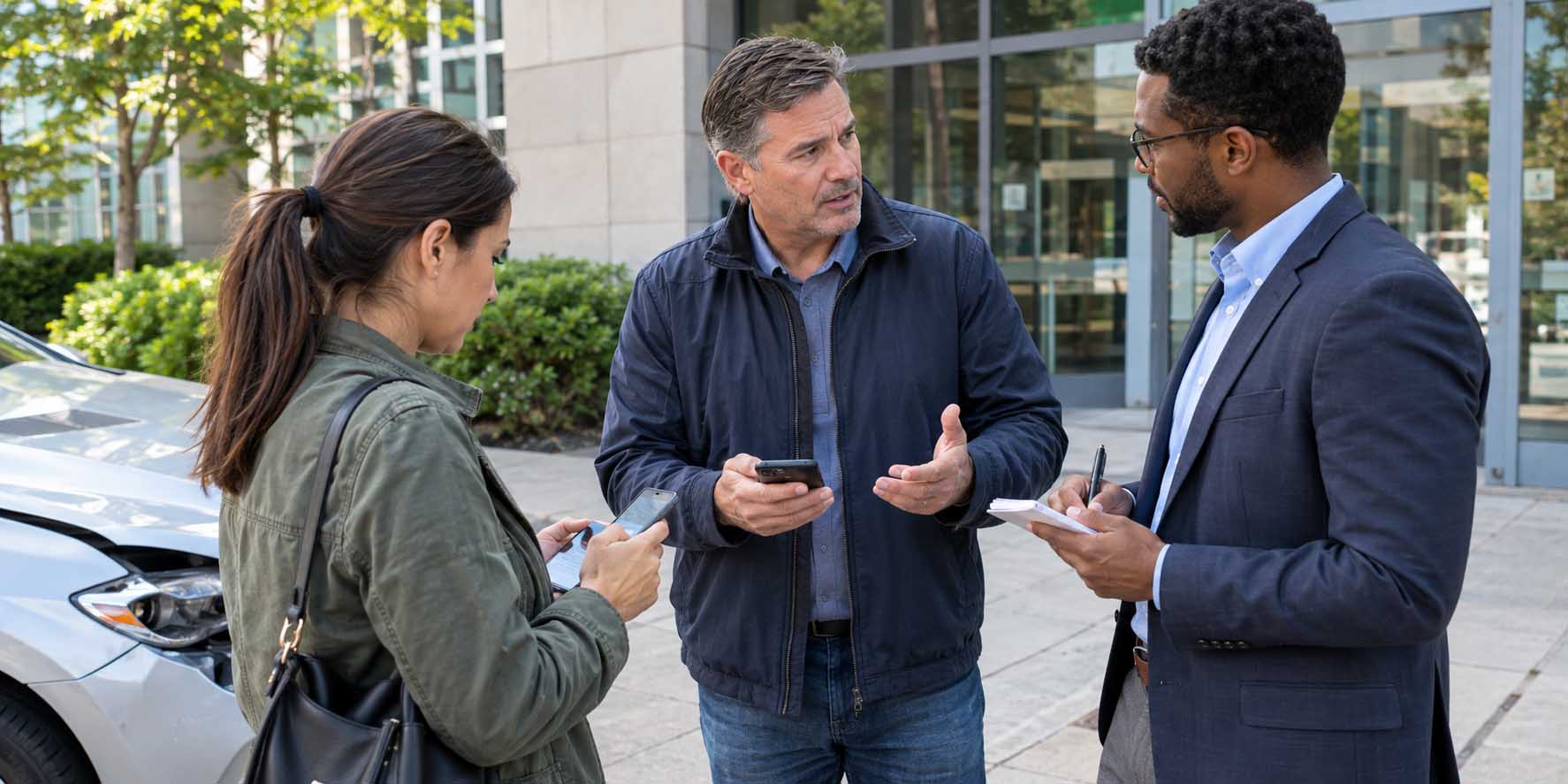
Witness information after an injury can help clarify how an accident happened, what conditions existed at the scene, and whether other people observed important details. Independent witnesses may provide information that photographs, medical records, and accident reports cannot fully explain.
For example, a witness might describe a driver’s actions before a collision or identify a hazardous condition near a building entrance.
However, witness accounts are not automatically accurate or conclusive.
Their usefulness depends on what the person actually observed, the reliability of their recollection, and how the information relates to the disputed facts.
Understanding how to identify and preserve witness information can help injured individuals maintain a clearer record of an accident.
What Is Witness Information After an Injury?
Witness information generally includes identifying details and factual observations from someone who saw or heard circumstances relevant to an accident.
A witness may have observed the incident itself or important events immediately before or afterward.
For example, someone might notice a damaged handrail before another person falls.
Alternatively, a nearby employee may remember when a maintenance problem was first reported.
Useful witness information may include:
- Full name
- Preferred contact method
- Telephone number or email address
- Location during the incident
- What the person personally observed
- Approximate time of the observation
- Whether the witness has relevant photographs or recordings
However, collecting information should remain voluntary and respectful of personal privacy.
Why Are Witnesses Important in Personal Injury Claims?
Witnesses may help establish facts that the parties remember differently.
For example, two drivers involved in a collision may disagree about which vehicle entered an intersection first.
An independent observer may provide additional information about the traffic signal or vehicle movements.
Similarly, a witness to a premises accident might describe the condition of a walking surface before someone fell.
However, witness testimony does not automatically establish negligence.
The information must still be evaluated alongside physical evidence, applicable legal duties, and other relevant circumstances.
Different Types of Accident Witnesses
Not every witness contributes the same type of information.
Eyewitnesses
Eyewitnesses directly observe an accident or an important part of it.
For example, a pedestrian may see a cyclist collide with another person at an intersection.
Their account may help reconstruct the sequence of events.
Condition Witnesses
Condition witnesses observe circumstances surrounding an accident, even if they do not see the injury occur.
For example, a store employee may remember discovering a spill before a customer slipped.
This information may become relevant when evaluating notice of a hazardous condition.
Aftermath Witnesses
Aftermath witnesses arrive immediately after an incident or observe its immediate consequences.
They may describe the location, visible conditions, or actions taken afterward.
However, they should not be treated as eyewitnesses to events they did not personally observe.
How to Collect Witness Information After an Injury
Collecting witness details promptly may help preserve information before memories fade or people become difficult to contact.
However, medical attention and immediate safety should always take priority.
When circumstances permit, ask whether the person is comfortable sharing contact information.
Additionally, record where the witness was positioned and what they say they observed.
For example, someone standing across a parking lot may have a different perspective from a person directly beside the accident location.
Avoid asking leading questions that suggest a preferred answer.
Instead of asking, “Did you see the driver speeding?” consider asking, “What did you notice about the vehicle before the collision?”
Open-ended questions may produce a more accurate account.
How Witness Information Supports Injury Claims on Long Island
Personal injury matters in Nassau County and Suffolk County may involve traffic collisions, unsafe property conditions, pedestrian incidents, and other accidents.
In these situations, witness observations can provide context for questions about responsibility and causation.
For example, a witness may help establish whether a business employee received a warning about a dangerous condition before an accident.
Individuals researching the personal injury services offered by Siben & Siben can find information about the firm’s legal practice in Bay Shore, New York.
However, a witness statement is only one component of a potential claim.
Medical evidence, physical documentation, and applicable legal standards remain important.
What Makes a Witness Statement Reliable?
A useful witness statement generally distinguishes direct observations from assumptions.
Several factors may affect reliability.
Opportunity to observe: Was the person close enough to see the relevant events?
Visibility: Did lighting, weather, or surrounding objects obstruct the person’s view?
Timing: How soon after the accident did the witness describe what happened?
Consistency: Does the account remain reasonably consistent with other reliable evidence?
Personal knowledge: Is the witness describing firsthand observations or repeating information from someone else?
For example, a witness who directly observed a vehicle turning may provide stronger evidence about that movement than someone who arrived several minutes later.
However, reliability must be evaluated according to the full circumstances.
Should Witness Statements Be Written or Recorded?
Written statements and recordings may both help preserve relevant observations.
A written statement can document the witness’s account in their own words.
Meanwhile, an audio or video recording may preserve additional details about how the witness described an event.
However, recording laws and privacy considerations must be respected.
In New York, recording a conversation generally requires the consent of at least one participating party, but additional legal considerations may apply.
Therefore, obtaining clear permission before recording is a practical precaution.
Importantly, witnesses should not be pressured to provide statements or adopt wording they do not agree with.
Common Mistakes When Handling Witness Information
Several mistakes can reduce the usefulness of witness evidence.
These include:
- Waiting too long to request contact details
- Recording only a first name
- Failing to identify where the witness stood
- Asking suggestive questions
- Mixing personal assumptions with witness observations
- Pressuring someone to support a particular version of events
- Sharing private contact information unnecessarily
For example, a note stating that a witness “confirmed negligence” may be less useful than an accurate description of what the person actually observed.
Factual documentation is generally more helpful than legal conclusions attributed to a witness.
Can a Personal Injury Claim Proceed Without Witnesses?
Yes. A personal injury claim does not necessarily require an independent eyewitness.
Other evidence may help establish relevant facts.
For example, surveillance footage, accident photographs, maintenance records, and medical documentation may support particular aspects of a claim.
However, the strength of the available evidence depends on the circumstances.
Likewise, having several witnesses does not automatically establish liability if their accounts do not support the necessary legal elements.
Final Thoughts
Witness information after an injury can provide valuable context about an accident, surrounding conditions, and the actions of people involved.
However, witness evidence is most useful when it accurately reflects firsthand observations and is preserved without pressure or speculation.
Collecting voluntary contact details, documenting the witness’s perspective, and distinguishing observations from assumptions can help maintain reliable accident records.
When combined with other relevant evidence, accurate witness information may support a clearer evaluation of the circumstances and potential legal responsibility.