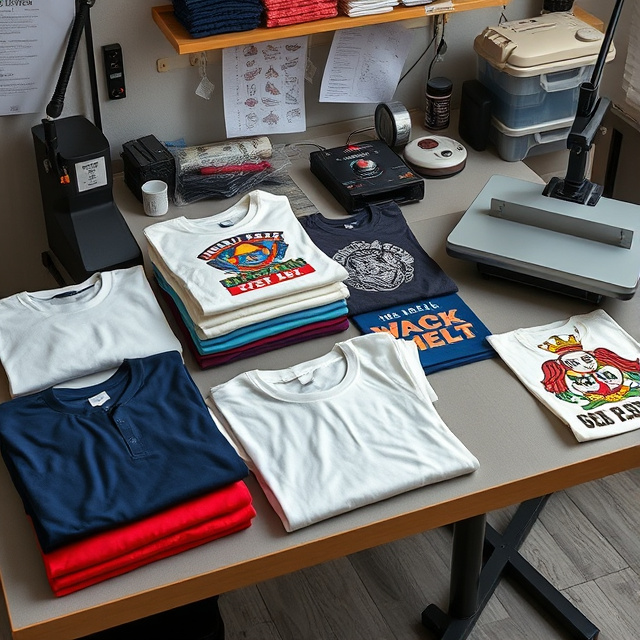
T-shirt printing for cotton and polyester garments requires choosing a printing method that suits the fabric, design, garment color, and intended production workflow. Cotton and polyester behave differently during printing, so a method that works well for one material may not be the most practical choice for another.
For businesses producing custom apparel, understanding fabric compatibility before investing in equipment can help prevent avoidable production problems and make equipment selection more straightforward.
Why Fabric Matters in T-Shirt Printing
Cotton and polyester have different fiber characteristics, which affects how certain printing processes interact with the garment.
Cotton is commonly used for everyday T-shirts, fashion apparel, promotional clothing, and many custom garments. Polyester is widely used for sportswear, performance clothing, uniforms, and other applications where synthetic fabric properties are desirable.
Blended fabrics combine characteristics of both materials. Because of this, a printing method should be evaluated against the actual garments a business plans to sell rather than simply choosing equipment based on the printer name.
Important questions include:
- Is the garment cotton, polyester, or a blend?
- Is the shirt light or dark?
- Does the design contain detailed colors or solid graphics?
- Will the design cover a small area or a large section?
- Are individual pieces or larger batches being produced?
- Does the printing process require a heat press or another finishing stage?
DTF Printing for Cotton and Polyester
Direct-to-film, commonly called DTF, is a transfer-based printing process. Instead of printing directly onto the garment, the design is printed onto a special PET transfer film. Adhesive powder is then applied and cured before the design is transferred to the garment using a heat press.
One reason DTF is frequently considered for custom apparel is its versatility across different garment types. Depending on the specific materials, inks, transfer settings, and production process, DTF can be used for cotton, polyester, blends, and both light and dark garments.
The workflow generally involves:
- Preparing the artwork.
- Printing the design onto transfer film.
- Applying hot-melt adhesive powder.
- Curing the transfer.
- Positioning the transfer on the garment.
- Applying heat and pressure with a heat press.
- Cooling, peeling, and inspecting the finished print according to the transfer process.
For a business working with multiple garment materials, this workflow can provide a flexible approach to custom apparel production.
DTG Printing for Cotton Garments
Direct-to-garment, or DTG, printing places ink directly onto the garment rather than creating a separate transfer.
DTG is particularly associated with cotton apparel because the printing process is designed around applying textile ink directly to the garment surface. Depending on the equipment and ink system, pretreatment may be required, especially for certain garment colors.
A typical DTG workflow can involve garment preparation, pretreatment where required, printing, and curing.
DTG can be useful when a business wants detailed artwork printed directly onto suitable garments. However, fabric compatibility should always be checked against the particular printer, ink system, and garment being used.
Sublimation and Polyester
Dye sublimation has a different relationship with fabric. It is commonly associated with polyester because the dye is transferred into suitable synthetic fibers through heat.
This makes sublimation particularly relevant for polyester apparel and products designed specifically for sublimation printing.
A major consideration is garment color. Traditional dye-sublimation workflows are generally most suitable for light-colored polyester because the process does not work like an opaque white-ink printing system.
Therefore, someone choosing between sublimation and DTF should consider both the fabric and the garment color rather than asking only which method is more suitable for T-shirts.
Cotton vs Polyester: Which Method Should You Choose?
There is no single printing method that is automatically appropriate for every cotton and polyester garment.
A simple comparison looks like this:
| Printing Method | Cotton | Polyester | Dark Garments | Typical Workflow |
|---|---|---|---|---|
| DTF | Suitable | Suitable | Suitable with appropriate process | Film printing, powder, curing, heat press |
| DTG | Well suited to compatible garments | More limited depending on system | Possible with appropriate equipment/process | Pretreatment, direct printing, curing |
| Sublimation | Generally not the primary choice | Well suited to suitable polyester | Generally suited to light garments | Sublimation print and heat transfer |
The exact compatibility depends on the equipment, inks, garment composition, and manufacturer instructions. A business should therefore verify technical specifications before standardizing its production process.
Choosing Equipment for Mixed-Fabric Apparel
If a business plans to print on both cotton and polyester, flexibility becomes an important equipment consideration.
A broader T-shirt printing equipment selection can be evaluated by looking at supported materials, printing technology, print size, resolution, workflow requirements, and the additional equipment needed to finish garments.
The printer itself is only one part of the decision. Businesses should also consider heat presses, transfer materials where applicable, inks, curing equipment, RIP software, maintenance supplies, and available workspace.
Think About Garment Color Too
Fabric type is only one part of compatibility. Garment color can also influence the choice of printing process.
Light-colored shirts may allow certain printing methods to work without an opaque base layer. Dark garments can require different ink or transfer approaches to maintain the intended appearance of the artwork.
For example, white ink is an important component of many DTF and DTG workflows when printing designs that need a light base on darker garments.
This is why a business should evaluate fabric and color together when deciding on its printing method.
Consider the Designs You Actually Sell
The type of artwork can also influence equipment selection.
A business producing simple logos may have different requirements from one printing photographic artwork, detailed illustrations, gradients, or full-color graphics.
Likewise, a company producing sportswear may prioritize polyester compatibility, while a fashion-oriented brand may work primarily with cotton or cotton-rich garments.
Instead of selecting equipment based on a general idea of “T-shirt printing,” list the actual products and designs that will make up most of the expected orders.
A Practical Fabric-Compatibility Checklist
Before choosing a printing setup, confirm:
- Primary garment fabrics
- Fabric blends and composition
- Light and dark garment requirements
- Typical print dimensions
- Artwork complexity
- Expected production volume
- Required finishing equipment
- Ink and consumable requirements
- Pretreatment requirements
- Heat and curing requirements
- Maintenance procedures
It is also useful to test representative garments before committing to a large production workflow. A process that performs well on one cotton shirt may behave differently on another fabric blend or garment finish.
The Bottom Line
T-shirt printing for cotton and polyester depends on more than the printer itself. DTF can provide a flexible transfer-based workflow across various apparel materials, DTG is closely associated with direct printing on suitable garments, and sublimation is particularly relevant to suitable polyester products.
The right choice depends on the combination of fabric, garment color, artwork, production volume, and workflow. By evaluating those factors together, apparel businesses can choose printing equipment that fits the garments they actually intend to produce rather than relying on a one-size-fits-all approach.